


South Asia Subregional Economic Cooperation Vision: Powering Asia in the 21st Century
28 April 2017
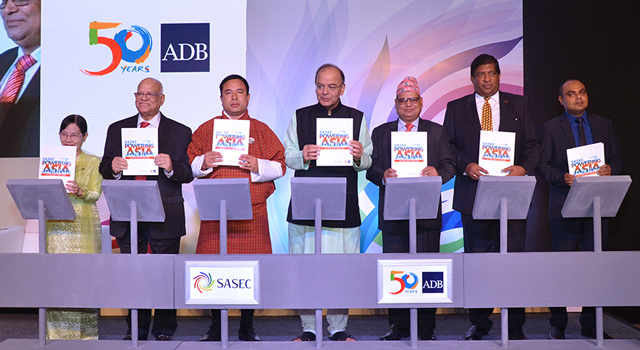
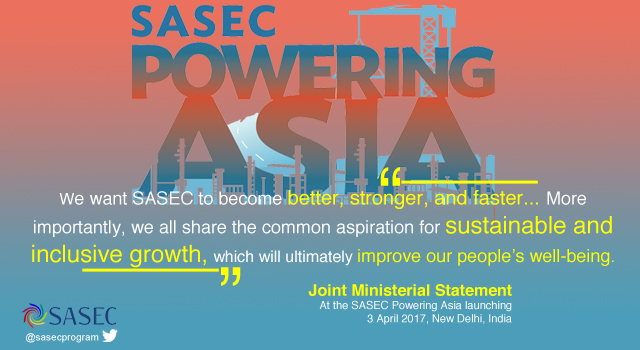
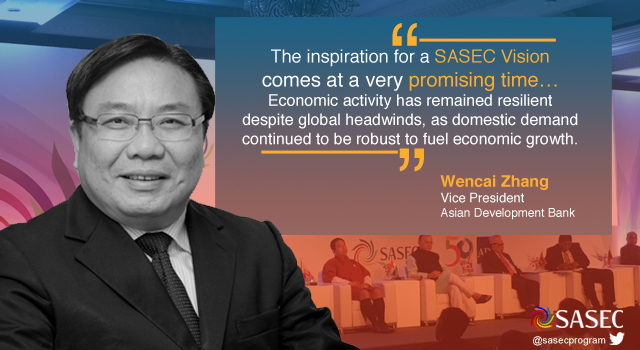
SASEC Powering Asia in the 21st Century defines the South Asia Subregional Economic Cooperation (SASEC) Vision. Launched and endorsed by Finance Ministers of SASEC member countries on 3 April 2017 in New Delhi, India, the SASEC Vision sets the SASEC partnership on a path to transform the subregion into Asia's powerhouse in the 21st century through regional cooperation.
Over the next 20 years, approximately 1.45 billion people in South Asia will enter the productive age group seeking better opportunities and economic security. By 2025, the population in the age group of 15–64 years in SASEC countries is expected to be in the range of 66–70% of the total population. With a short window of opportunity, countries need to provide avenues for growth. SASEC sees the role of regional cooperation and integration taking on greater importance in helping accelerate and sustain economic growth in the region.
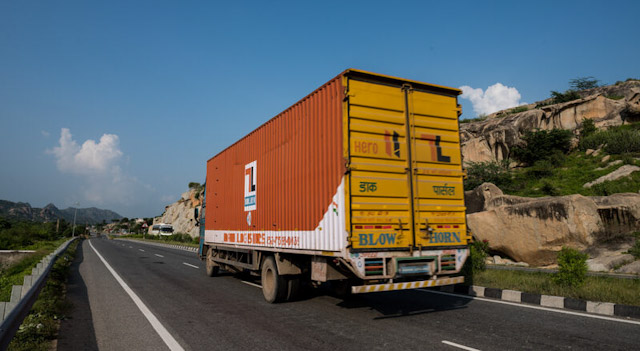
This shared Vision frames SASEC in the larger context of the subregion's growth and development objectives by articulating shared aspirations of the SASEC countries (Bangladesh, Bhutan, India, Maldives, Myanmar, Nepal, and Sri Lanka). It steps up cooperation among SASEC member countries, guiding them how to transform national and subregional road transport corridors into industrial and economic corridors that bring jobs, promote domestic and foreign direct investment, trade and services, urban development, and promoting sustainable economic growth by generating synergies between the subregion's natural resources, industries, and infrastructure, potentially generating $70 billion incremental GDP, and 20 million additional employment annually by 2025.
The Vision focuses on three collaboration levers available to SASEC economies to deliver on the new agenda:
- Share resources to feed latent industry demand;
- Bolster industrial networks by tapping individual country specializations; and
- Create symbiotic trade relationships by linking trade routes with stronger gateways and hubs to access regional and global markets.
SASEC's current operational priorities—transport, trade facilitation, energy, and economic corridors—will continue to provide key inputs for the realization of the vision, as outlined in the SASEC Operational Plan 2016-2025.
The SASEC partnership of Bangladesh, Bhutan, India, Maldives, Myanmar, Nepal, and Sri Lanka has achieved significant progress since its inception in 2001. As of January 2017, 46 projects have been approved in transport, trade facilitation, energy, and information and communication technology worth $9.17 billion, with extended loans and grants amounting to $5.9 billion and technical assistance worth $65.39 million from the Asian Development Bank.
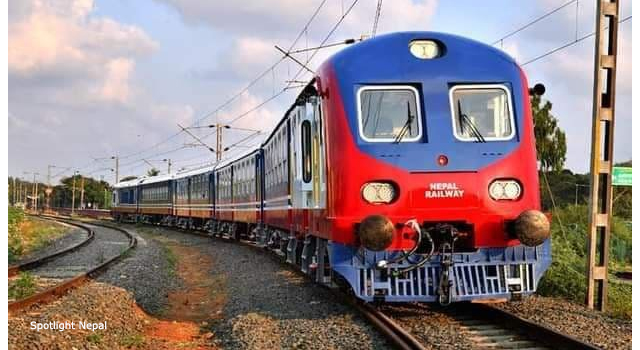
Projects implemented under the SASEC partnership have improved infrastructure connectivity—promoting access to key markets and gateway ports, and enhancing prospects for participating in regional and global value chains; made trade processes and procedures more efficient; and increased energy security by promoting electricity trade at a steady pace.
Related Links: