

SAARC to Finalize Standards Harmonization
12 March 2015
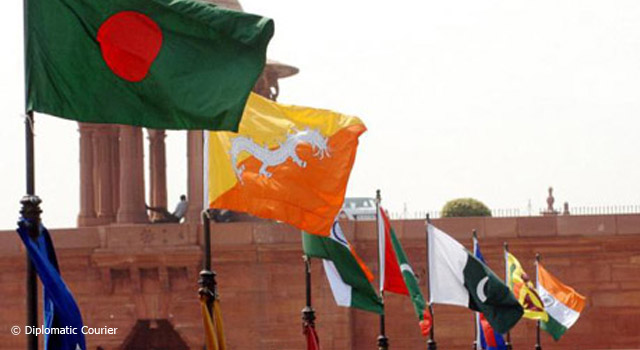
South Asian Association for Regional Cooperation (SAARC) countries are finalizing mutually acceptable standards in five sectors: food and agricultural products, jute, textile and leather, building materials, chemicals and chemical products, and electrical and electronic products. These sectors have significant trade interest for member countries.
Since divergence in standards is a major non-tariff barrier for trade, harmonization can help boost trade within South Asia and assist member countries in looking for markets beyond the region. It can further be seen as a first step in creating a South Asian value chain, said Ram Upendra Das, professor of Research and Information System for Developing Countries.
SAARC members established the South Asian Regional Standards Organization (SARSO) in 2011 that became operational on 3 April 2014. Standards finalized by SARSO are known as SAARC Regional Standards and will be mandatorily followed by all member countries. Technical committees are meeting and harmonization of standards discussed.
According to Chandal Bahl, Head of International Relations Department in the Bureau of Indian Standards, products are identified and national standards are harmonized into a distinctive SAARC standard. After the stakeholders validate the products with their own national standards, it has to be ratified by their respective countries and a unanimous decision reached. In addition, countries are developing a mutual recognition agreement on quality assessment, with certification mostly taking place in the product’s country of origin without depending on the certification of the destination country.
SARSO is also working with SASEC countries to support initiatives through the South Asia Subregional Economic Cooperation Trade Facilitation Strategic Framework 2014-2018 that identifies standards conformity as a priority area. SAARC member countries include Afghanistan, Bangladesh, Bhutan, India, the Maldives, Nepal, Pakistan, and Sri Lanka.
Related Links:
SASEC Trade Facilitation Week: Sanitary/Phytosanitary and Technical Barriers to Trade
SAARC countries to harmonize standards to boost trade
SASEC Trade Facilitation Strategic Framework 2014-2018